
Stingless Bees of Costa Rica: Protecting Melipona Bees at Hacienda Guachipelín
At Hacienda Guachipelín, nature is not just something we admire, it is something we actively protect. One of our newest and most meaningful conservation initiatives focuses on a small yet extraordinary species: stingless bees, known locally as melipona bees, including the beloved mariola.
These remarkable bees are essential to the health of tropical ecosystems, and today, they need our help more than ever.
What Are Melipona Bees?
Stingless bees belong to the tribe Meliponini, part of the Apidae family, and are native to the tropical and subtropical regions of the Americas, including Mexico, Central America, and South America.
There are more than 400 species of stingless bees in the Neotropics, each playing a critical role in pollination. Unlike honeybees, these bees do not have a functional stinger, making them gentle and safe to observe.
Among the most well-known species is Melipona beecheii, historically valued for its highly prized medicinal honey.
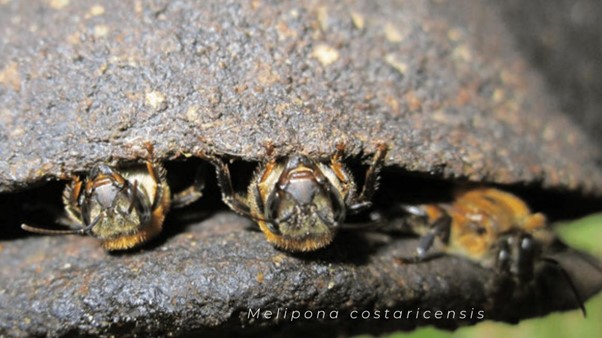
Close-up of stingless bees leaving their hive at Hacienda Guachipelín
The Medicinal Value of Melipona Honey
Melipona honey is unlike any other. Produced in small quantities, it is rich in natural compounds and has traditionally been valued for its medicinal properties.
This high-quality honey has long been associated with natural remedies used for a variety of conditions, including:
- Ulcers
- Psoriasis
- Eye conditions such as conjunctivitis and cataracts
Its delicate texture, slightly acidic flavor, and traditional healing reputation make it one of the most unique honeys produced in tropical America.
Why Stingless Bees Matter
Stingless bees in Costa Rica and across the Neotropics act as key pollinators for a wide variety of native plants and agricultural crops. They help maintain biodiversity and can improve the productivity of crops such as:
- Avocado
- Coffee
- Cacao
In many tropical environments, stingless bees are especially efficient pollinators of local flora, making them essential to ecosystem balance.
However, populations of stingless bees have declined significantly due to:
- Deforestation
- Pesticide use
- Urbanization
- Climate change
In some regions, particularly in traditional meliponiculture areas of Mexico, losses of Melipona beecheii colonies have exceeded 90% over recent decades. Across Latin America, studies indicate ongoing declines, with annual colony losses estimated in the range of 30% to 40%.
Costa Rica, Conservation, and Biodiversity
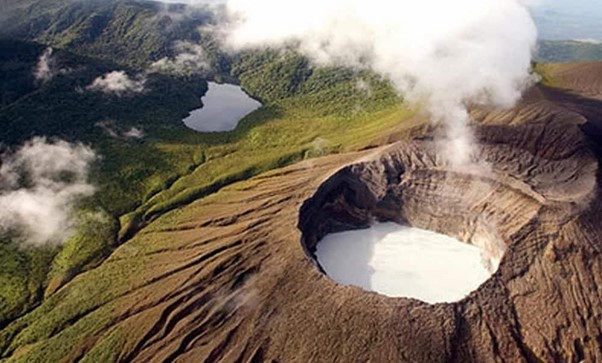
Crater of Rincón de la Vieja in Costa Rica
Costa Rica is a country where environmental awareness and respect for nature have become part of everyday life. Conservation is deeply embedded in the identity of the people who live in this remarkable country.
More than 25% of Costa Rica’s territory is protected through the National System of Conservation Areas, known as SINAC. The country is home to around 30 national parks, including Rincón de la Vieja National Park, one of Guanacaste’s most extraordinary natural treasures.
This national park is our neighbor. Hacienda Guachipelín, with more than 1,000 hectares of private forest reserve, serves as a buffer zone that supports the protection of this unique ecosystem.
Our Stingless Bee Project at Hacienda Guachipelín
At Hacienda Guachipelín, we are excited about our project to protect stingless bees, including the local mariola bee. Today, the hacienda is home to more than 20 stingless bee hives.
Our efforts focus on:
- Protecting existing colonies
- Helping reproduce and expand their populations
- Promoting awareness and knowledge about these important pollinators
The honey we produce is used mainly in wellness treatments and is also sold to our guests for personal use.
Conservation, Tradition, and Guest Experience
Preserving these bees is about much more than protecting a species. It is also about preserving traditions, strengthening biodiversity, and sharing meaningful experiences with our guests.
At Hacienda Guachipelín, our team is motivated by the opportunity to conserve and share the natural richness of Rincón de la Vieja while offering guests adventure, wellness, and a close connection to nature.
Projects like this reflect our commitment to sustainable tourism in Costa Rica and to protecting the species that make our ecosystems thrive.
Experience nature, conservation, and wellness at Hacienda Guachipelín, located next to Rincón de la Vieja National Park.
Stingless Bees of Costa Rica: Protecting Melipona Bees at Hacienda Guachipelín
At Hacienda Guachipelín, nature is not just something we admire, it is something we actively protect. One of our newest and most meaningful conservation initiatives focuses on a small yet extraordinary species: stingless bees, known locally as melipona bees, including the beloved mariola.
These remarkable bees are essential to the health of tropical ecosystems, and today, they need our help more than ever.
What Are Melipona Bees?
Stingless bees belong to the tribe Meliponini, part of the Apidae family, and are native to the tropical and subtropical regions of the Americas, including Mexico, Central America, and South America.
There are more than 400 species of stingless bees in the Neotropics, each playing a critical role in pollination. Unlike honeybees, these bees do not have a functional stinger, making them gentle and safe to observe.
Among the most well-known species is Melipona beecheii, historically valued for its highly prized medicinal honey.
The Medicinal Value of Melipona Honey
Melipona honey is unlike any other. Produced in small quantities, it is rich in natural compounds and has traditionally been valued for its medicinal properties.
This high-quality honey has long been associated with natural remedies used for a variety of conditions, including:
- Ulcers
- Psoriasis
- Eye conditions such as conjunctivitis and cataracts
Its delicate texture, slightly acidic flavor, and traditional healing reputation make it one of the most unique honeys produced in tropical America.
Why Stingless Bees Matter
Stingless bees in Costa Rica and across the Neotropics act as key pollinators for a wide variety of native plants and agricultural crops. They help maintain biodiversity and can improve the productivity of crops such as:
- Avocado
- Coffee
- Cacao
In many tropical environments, stingless bees are especially efficient pollinators of local flora, making them essential to ecosystem balance.
However, populations of stingless bees have declined significantly due to:
- Deforestation
- Pesticide use
- Urbanization
- Climate change
In some regions, particularly in traditional meliponiculture areas of Mexico, losses of Melipona beecheii colonies have exceeded 90% over recent decades. Across Latin America, studies indicate ongoing declines, with annual colony losses estimated in the range of 30% to 40%.
Costa Rica, Conservation, and Biodiversity
Costa Rica is a country where environmental awareness and respect for nature have become part of everyday life. Conservation is deeply embedded in the identity of the people who live in this remarkable country.
More than 25% of Costa Rica’s territory is protected through the National System of Conservation Areas, known as SINAC. The country is home to around 30 national parks, including Rincón de la Vieja National Park, one of Guanacaste’s most extraordinary natural treasures.
This national park is our neighbor. Hacienda Guachipelín, with more than 1,000 hectares of private forest reserve, serves as a buffer zone that supports the protection of this unique ecosystem.
Our Stingless Bee Project at Hacienda Guachipelín
At Hacienda Guachipelín, we are excited about our project to protect stingless bees, including the local mariola bee. Today, the hacienda is home to more than 20 stingless bee hives.
Our efforts focus on:
- Protecting existing colonies
- Helping reproduce and expand their populations
- Promoting awareness and knowledge about these important pollinators
The honey we produce is used mainly in wellness treatments and is also sold to our guests for personal use.
Conservation, Tradition, and Guest Experience
Preserving these bees is about much more than protecting a species. It is also about preserving traditions, strengthening biodiversity, and sharing meaningful experiences with our guests.
At Hacienda Guachipelín, our team is motivated by the opportunity to conserve and share the natural richness of Rincón de la Vieja while offering guests adventure, wellness, and a close connection to nature.
Projects like this reflect our commitment to sustainable tourism in Costa Rica and to protecting the species that make our ecosystems thrive.
Experience nature, conservation, and wellness at Hacienda Guachipelín, located next to Rincón de la Vieja National Park.